 Holiday Lighting Guide · Permanent Lighting
How Much Do Permanent Christmas Lights Cost?
Typical industry ranges, the factors behind every quote, and how permanent lighting compares to years of seasonal installs.
Get a Free Quote →- Lower per-foot rates can mean fewer LEDs per foot, a basic controller or thinner warranty terms, so compare quotes like for like.
- A one-story ranch often has 120 to 180 feet of roofline; two-story homes with gables often run 250 feet or more.
- Stories, pitch, corners and dormers, trim color matching, LED spacing, zones and power supply locations move the per-foot rate.
- At typical industry ranges, permanent roofline lighting breaks even against seasonal roofline installs in about three to five seasons.
- In Houston, ask about heat-rated power supplies, sealed connections, UV on south and west walls, and HOA approval before you sign.
Permanent Christmas lights typically cost about $20 to $40 per linear foot of roofline installed, based on typical industry ranges, so the street-facing front of a large two-story, about 150 feet, works out to roughly $3,000 to $6,000 and a large Houston estate can reach five figures. Your roofline footage, stories, corners, zones and hardware decide where a quote lands.
This guide explains how the industry prices permanent holiday lighting, what pushes a quote up or down, and how to compare the up-front cost to years of seasonal installs. Every figure below is a typical industry range commonly quoted across the US, not a Glacier price; your real number comes from a free custom quote.
Permanent Christmas Lights Cost per Linear Foot
Permanent lighting is almost always priced per linear foot of roofline. The installer measures every run of eave, rake edge and peak that will get track, then applies a per-foot rate that usually bundles the aluminum channel, the LEDs, the power supplies, the controller and installation labor.
Across the industry, many installers quote roughly $20 to $40 per linear foot for a full permanent system. Some sit below that range, some above it, and a few price by package or by zone. Lower rates may reflect fewer LEDs per foot, a basic controller or thinner warranty terms. Higher rates may reflect two- and three-story elevations, steep pitches, custom color matching or premium hardware, all common on Houston's larger homes.
What Permanent Lights Cost on a House: Sample Math
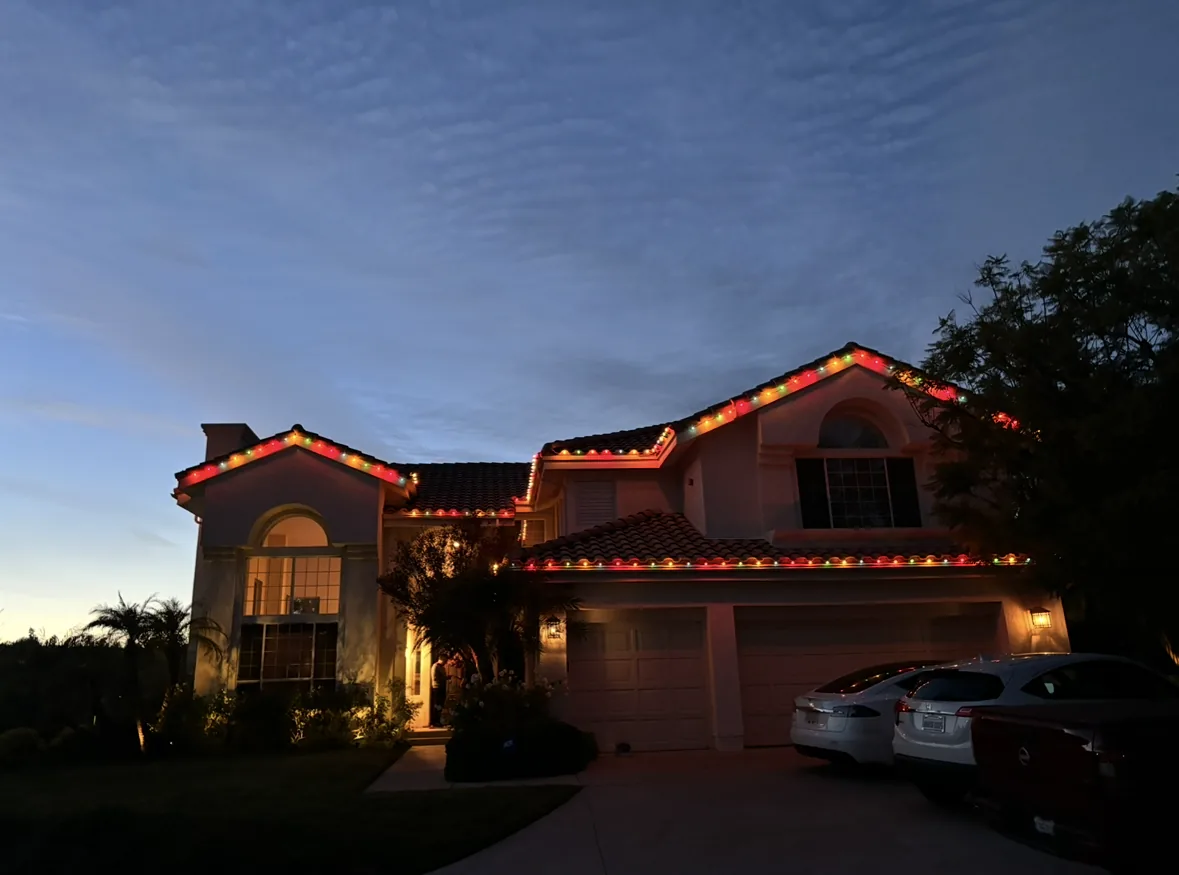
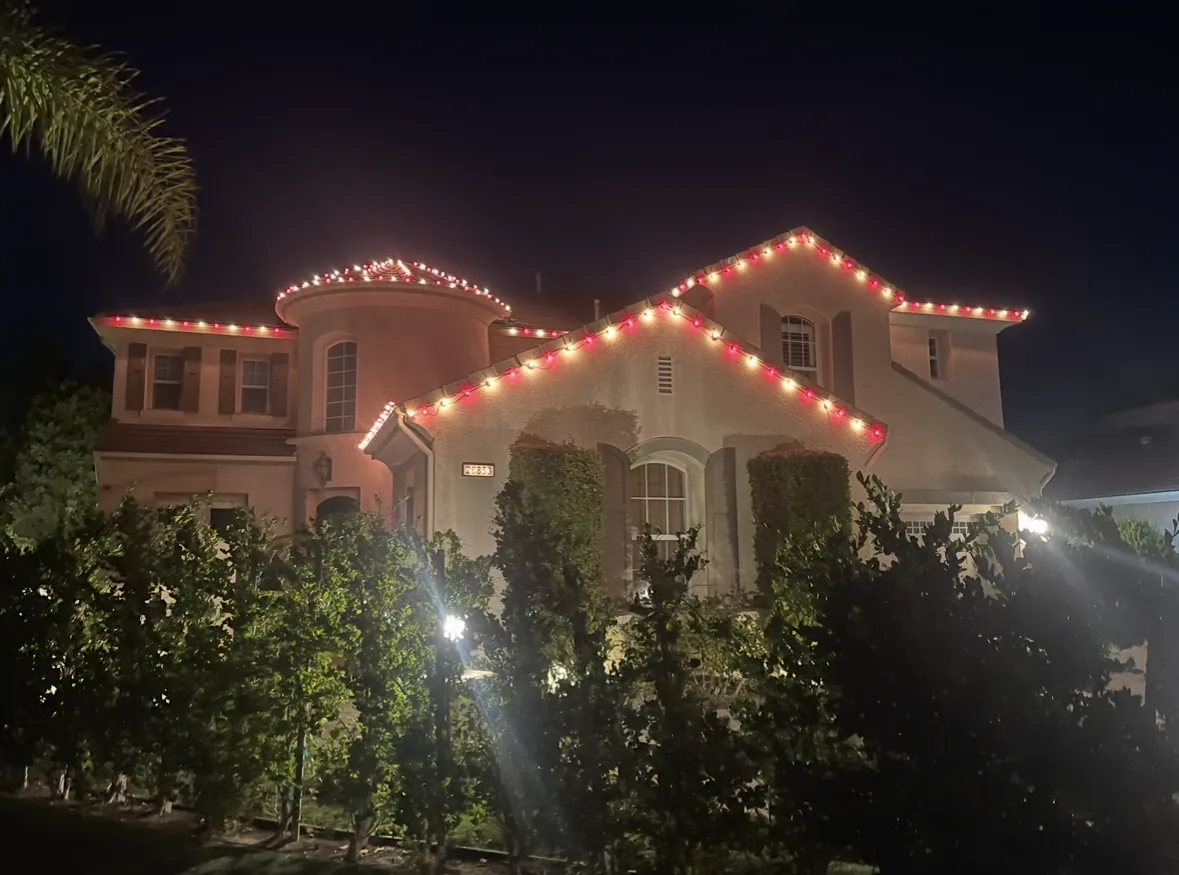
A one-story ranch may have 120 to 180 feet of roofline all the way around, while a two-story home with gables often runs 250 feet or more. Multiplying the industry range by a few sample footages gives a rough sense of scale. This is arithmetic, not a quote:
- ✓ Street-facing front of a large two-story, about 150 ft: roughly $3,000 to $6,000
- ✓ Full perimeter of a two-story with gables, about 250 ft: roughly $5,000 to $10,000
- ✓ Large estate, about 500 ft: roughly $10,000 to $20,000
So the average cost of permanent Christmas lights often lands somewhere from the low-to-mid thousands for a modest home up to five figures for a large estate with a detached garage, pool house and complex rooflines. A one-story ranch in Katy and a three-story Tudor in Memorial can share a per-foot rate and still differ by thousands, simply because of footage and access.
What Drives Permanent Christmas Lights Installation Cost
Linear footage and coverage
The biggest decision is coverage. Lighting only the street-facing side keeps costs down, while full-perimeter lighting adds the back and sides for parties, the pool deck and everyday security. Many homeowners start with the front and add zones later, so ask whether the system can be expanded with matching track and LEDs.
Stories and roof pitch
A single-story eave can often be reached from a ladder. Second and third stories, steep pitches and tall gables call for more crew time, harnesses and sometimes a lift. That labor is real, and it shows up in the per-foot rate.
Corners, gables and dormers
Every change of direction means a precise cut, a joint and a connection. A simple rectangular ranch home has few corners. A French or Tudor home with multiple gables, dormers and bump-outs can have dozens, and each one adds time and hardware.
Roof and trim type
Track mounts to the fascia board or under the soffit edge, not the roof surface, but roof and trim still matter. Clay tile and slate on many River Oaks and Memorial estates are fragile, so crews work from ladders set clear of the roof or from a lift. Homes with brick or stone running right up to the roofline, or deep crown molding instead of a flat fascia, may need custom mounting.
Track color matching
Good permanent lighting disappears in daylight. Most systems offer a range of stock track colors, and some installers offer custom finishes to match unusual trim. A close match to white, cream, bronze or black trim costs a little more but makes a big difference on a well-kept home.
LED spacing in the track
LED nodes are set at a fixed spacing inside the channel. Closer spacing gives smoother color fades and chases and a more continuous line, but adds LEDs, power and cost per foot. Ask for the spacing in writing so competing quotes compare like for like.
Zones and controllers
Each controller handles a limited number of LEDs, and larger homes often need more than one. Splitting the house into zones, such as front, back and pool house, adds flexibility and some hardware. A detached garage may need its own controller and power supply.
Power supply locations
Shorter runs from power supply to track mean less voltage drop and brighter, more even color at the far end. Ask where each power supply will plug in; if the best spot has no outlet, your electrician adds one before install day.
App and controller features
Basic systems run schedules and a set of color scenes. Premium systems add more LEDs per foot for smoother effects, smart-home integration, music sync and multi-user access. Decide which features you'll actually use before paying for them.
Warranty terms
Warranty terms vary a lot between installers and manufacturers. Ask what's covered separately for the LEDs, power supplies, controller and labor, for how long, and who comes out if a section fails. A lower price with thin coverage is not always the better deal.
Permanent vs. Seasonal: Thinking About Break-Even
Permanent lighting costs more up front than a single season of traditional Christmas lights. The trade is that it removes the yearly roofline install. A simple way to frame it: divide the permanent quote by what you spend on roofline lighting each season, and the result is roughly how many seasons it takes to break even.
Using typical industry ranges on a 200-foot roofline, seasonal roofline installs run about $800 to $2,400 a year ($4 to $12 per foot) and permanent about $4,000 to $8,000 once ($20 to $40 per foot). Compare quotes from the same end of each range and break-even lands around three to five seasons, before counting Halloween, game days and everyday warm white. Our Houston installation cost guide covers the seasonal side in detail.
A few caveats keep the math honest. Permanent track covers the roofline only, so wrapped trees, garland and wreaths remain a seasonal expense. The calculation also favors homeowners who plan to stay for years. For a fuller comparison of looks and lifestyle, see permanent vs. traditional Christmas lights.
Houston and Gulf Coast Considerations
Heat and sun
Houston summers bake soffits, attics and garages. Power supplies and controllers should be rated for real heat and installed where they get some airflow, not wedged against a hot roof deck. South and west elevations take the most sun, and west walls catch the hottest afternoon hours, so ask how the track finish and lenses hold up to UV.
Humidity, rain and storms
Year-round lighting lives through tropical downpours, constant humidity and a hurricane season that runs June through November. Sealed, weather-rated connections and careful wire routing matter more here than in a dry climate. Track tucked under the eave is naturally more protected than anything clipped to a gutter.
Salt air near the coast
Homes near Clear Lake and Galveston Bay, including the bayside parts of League City, see salt air that is hard on exposed metal and connections. Ask about sealed connectors, corrosion-resistant mounting hardware and controller locations that stay out of the weather.
Deed restrictions and HOAs
In communities with design review, such as The Woodlands, get approval before you sign; changing track color or mounting after install is an expensive kind of revision.
Timing
Off-season installs, spring through early fall, avoid competing with November crews for install dates.
How to Get an Accurate Quote
A website calculator can't see your gables. The most accurate number comes from an installer who measures the home and asks the right questions. Before you call, think through:
- ✓ Front-only or full perimeter, and any detached buildings
- ✓ How many zones you want to control separately
- ✓ Where exterior, garage and attic outlets are located
- ✓ Your HOA or deed restriction rules on lighting
- ✓ Trim and soffit colors, with a few photos
Then compare quotes on the same terms: total linear feet, LEDs per foot, number of controllers, track color, and warranty coverage in writing. Glacier's permanent quotes list footage by elevation, LED spacing, controllers and zones, so you can phase the project or set it beside a seasonal quote.
Ready to see what it would take for your home? Start with our permanent Christmas lights service, see how we approach estates on permanent lighting in River Oaks, or request a free custom quote.

Ready for a Free Quote?
Tell us about your property and we will put together a custom design and quote for your Houston home or business.
Frequently Asked Questions
+How much do permanent Christmas lights cost?
+What is the average cost of permanent lights on a house?
+Why does permanent holiday lighting cost more than seasonal lights?
+Do permanent Christmas lights pay for themselves?
+What should a permanent lights installation quote include?