 Holiday Lighting Guide · Events
Wedding Uplighting & String Light Ideas
Colors, placement and bistro light layouts for Houston estate, tented and holiday-season weddings, plus a weather plan.
Get a Free Quote →- Warm amber, champagne and soft white uplighting flatter skin in photos; keep saturated blues and greens on drapes away from guests.
- Place uplights about every 6 to 10 feet for an even wall wash, or group them on columns, trees and the head-table backdrop.
- Bistro strands with S14 or G40 bulbs need solid anchors, a guide wire on long spans and a low point well above head height.
- Plan for Houston weather: tent sidewalls, connections off wet grass, GFCI-protected outlets and string lights secured for gusty fronts.
- Glacier sets up before the event and takes everything down the same night or the next day, depending on the venue.
The best wedding uplighting ideas for Houston start with warm tones that flatter skin. Aim fixtures at the venue's best features, such as columns, live oaks and the wall behind the head table, hang warm bistro lights over the outdoor reception, and keep a rain plan, because Houston weather always gets a vote.
Sunset changes everything. In Houston it falls roughly between 7:30 and 8:20 p.m. from mid-March through May, around 6:40 to 7:10 p.m. in October and about 5:25 p.m. in December, so dinner, toasts and the dance floor usually happen after dark. That's when lighting does most of its work: it makes a venue feel intimate, keeps guests looking their best in photos and turns a backyard into a room.
Wedding Uplighting 101
Uplighting means placing small fixtures on the floor and aiming them up a wall, column, drape or tree. Most event uplights today are battery-powered LED fixtures with red, green, blue, white and amber diodes, often shortened to RGBWA. The amber diode matters: it produces the warm golds and champagnes that flatter skin, which a red, green and blue mix alone struggles to match.
Wireless control lets every fixture change color together from an app or controller. Battery runtime varies by brand and by color, with full-brightness white draining batteries the most, so a long reception needs fixtures sized for the whole night or a plan to swap them during a quiet moment.
Choosing Uplighting Colors
Color is where couples have the most fun and make the most mistakes. The rule of thumb: whatever color hits the walls bounces onto your guests. Rich blues and greens can look stunning on a drape and unflattering on skin. Warm tones are almost always kind to faces and photos.
- ✓ Ivory and gold palettes: warm amber or champagne
- ✓ Blush and greenery: soft rose with warm white
- ✓ Modern black tie: crisp white with a touch of warmth
- ✓ Jewel tones: deep color on drapes, warm on tables
- ✓ Holiday weddings: warm white with deep red accents
Wireless fixtures make timed changes simple. Plan the cues with your DJ or planner, such as one shift when the dance floor opens and another for the send-off, and keep the first dance and toasts in warm light so your photographer isn't fighting color later.
Where to Place Wedding Uplighting
For an even wash along a wall, plan roughly one uplight every 6 to 10 feet, closer for rich, continuous color and farther apart for soft scallops of light. Fixtures grouped on features draw the eye instead. The strongest plans use a mix of both.
Trees
Houston estates have something most venues can't buy: mature live oaks. Two or three fixtures at the base, aimed up into the canopy, turn the tree into a glowing ceiling over the reception. Southern magnolias reflect light off their glossy leaves, and crepe myrtles show off smooth, mottled bark. Warm mini lights wrapped from the ground to the first branch add sparkle up close; our outdoor tree lighting page shows trunk and canopy wraps.
House uplighting placement
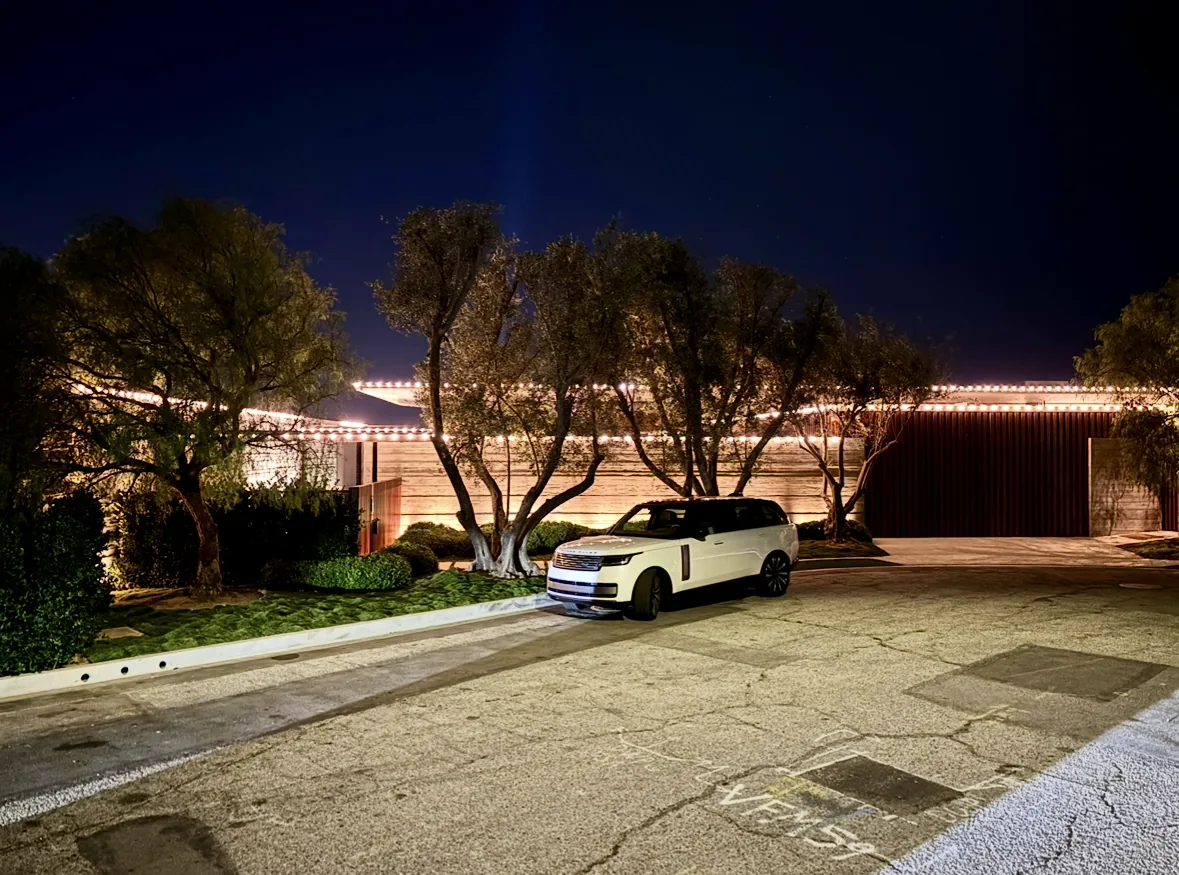
For a facade, set fixtures about 6 to 12 inches from the wall to graze the texture of brick or stone, or 2 to 3 feet out for a softer, broader wash on stucco. Center them on columns, piers and the spaces between windows, and never aim straight into a window, where the glare reflects back into photos. A softly lit house behind the head table makes a far better backdrop than a black night sky.
Focal points
Use tight, focused light on the cake, the sweetheart table, florals or a ceremony arch. Keep fixtures out of walkways, tape or tuck any cords, and make sure nothing shines straight into guests' eyes at table height.
Wedding venue lighting for ballrooms and indoor spaces
Ask the venue for its vendor packet early. It lists load-in hours, whether cords may cross service paths and whether anything can hang from the ceiling. Battery uplights tucked behind drape or under a stage edge avoid most cord rules entirely.
The practical lighting nobody photographs
Guests notice the canopy. They also notice when they can't see their way to the car. Backyard and estate events need functional light in places that rarely make the mood board:
- ✓ Garden paths between ceremony and reception
- ✓ Driveway, valet stand and parking area
- ✓ Steps, slopes and pool edges
- ✓ Restroom trailers and the catering tent
- ✓ The bar, where staff need to see to pour
Warm pathway lights and a few discreet fixtures keep these areas safe without breaking the mood. Pool edges deserve special attention at a home reception, where guests are walking in the dark in dress shoes.
Bistro Lighting Installation for Outdoor Receptions
Nothing says backyard celebration like a canopy of warm bistro lights. They work as the main overhead lighting for an outdoor reception and as a soft ceiling inside a sailcloth or frame tent.
- ✓ Zigzag: crisscross runs over a courtyard or lawn
- ✓ Perimeter swag: scalloped runs framing the space
- ✓ Starburst: runs radiating from a center pole
- ✓ Dance floor canopy: a tighter grid right over the floor
- ✓ Inside the tent: runs following the tent frame
Most market strands use S14 or G40 bulbs, with sockets commonly 1 to 3 feet apart. Warm bulbs around 2200K to 2700K keep the glow golden, and a dimmer lets the canopy come down as the evening goes on. Spans longer than about 20 feet should hang from a steel guide wire rather than their own cord, which keeps the line straight and takes strain off the sockets.
Every design needs solid anchor points. Trees carry runs on padded straps, never nails or screws, and freestanding poles need weighted bases or ground sleeves that won't lean on soft lawn. Keep the lowest point of every run well above head height, roughly 8 to 10 feet over walkways and higher above a dance floor, where arms go up.
Tented Backyard and Estate Weddings
Larger lots in neighborhoods like River Oaks, Memorial and Piney Point Village make at-home weddings and receptions possible. A home wedding is personal and beautiful. It's also a production.
Coordinate early with your tent company. The tent goes up first, then lighting hangs from the frame with clamps or ties the tent company approves. Settle power with your planner and tent provider: a smaller setup can plan cord runs from existing GFCI-protected outdoor outlets, while a large tent with catering, sound and climate control usually brings its own rental generator. Either way, cords run where guests won't walk.
Logistics matter on private streets. Share gate codes, delivery windows and staff contacts in advance, and give neighbors a heads up about trucks and parking. A home event usually means setup the day before, and takedown happens the same night or the next day, depending on the venue, so the lawn looks like a lawn again soon after.
Holiday-Season Weddings in Houston
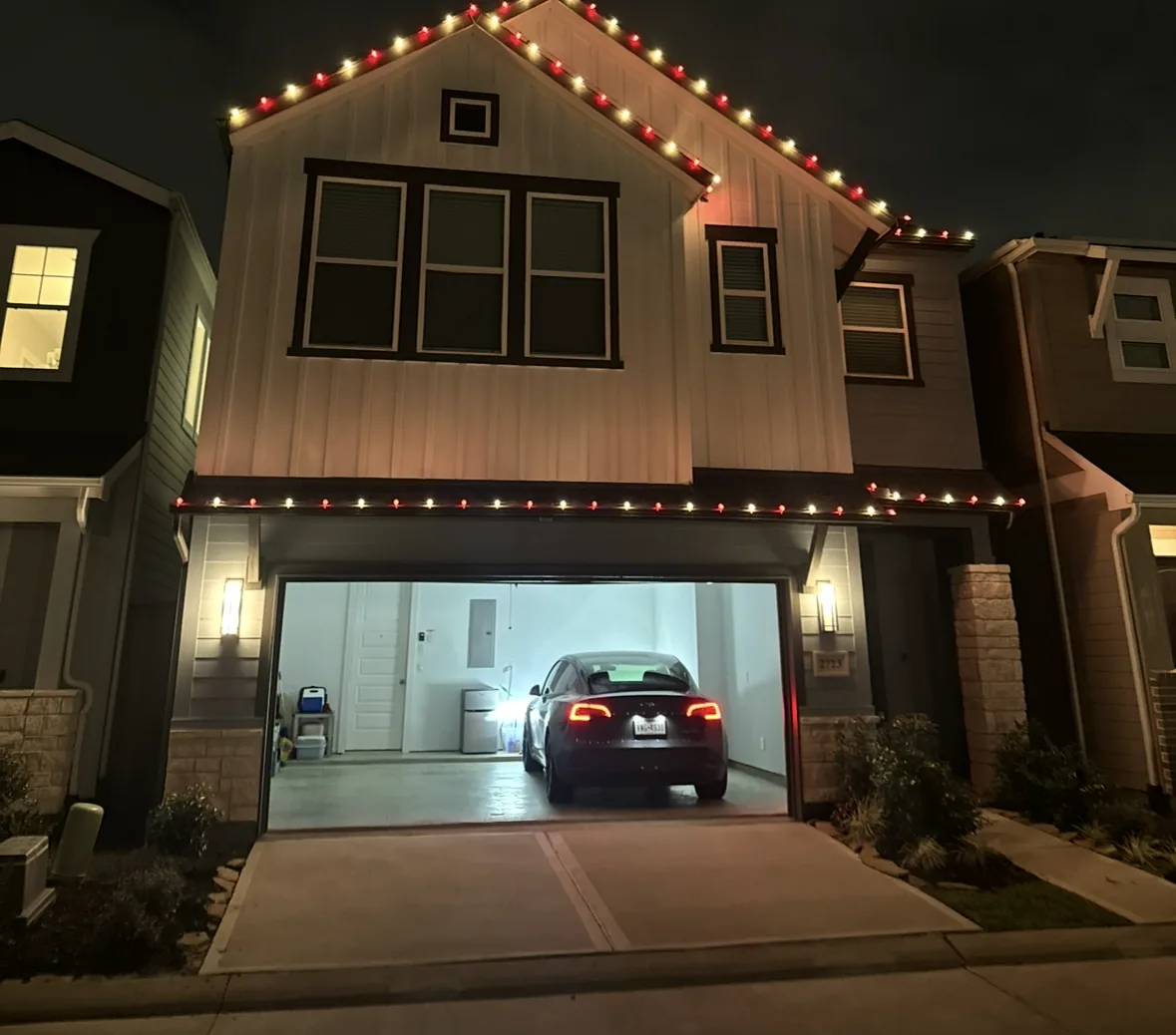
December is a lovely month for a Houston wedding. Highs in the 60s are usually mild enough for outdoor photos, and the season adds built-in magic. If you're hosting at home, your holiday installation can do double duty. A wrapped live oak, garland on the entry and a clean roofline outline from our residential Christmas lights service set the stage before the event lighting even arrives.
Timing is the catch. Holiday installs happen in November, so couples planning December events should book both Christmas light installation and event lighting by early fall and coordinate them as one plan, with outlets and cord runs shared rather than doubled.
A holiday wedding also changes the color conversation. Deep reds, evergreen garland and gold accents are already in the room, so uplighting should support them rather than compete. Warm white on the trees, soft amber on the walls and candlelight on the tables usually does more than any saturated color. If your venue is already decorated for Christmas, ask what stays up so your lighting plan works with it.
Planning for Houston Humidity and Rain
Houston weather keeps everyone humble. Humidity, pop-up showers and the occasional gusty front can show up in any season, so every outdoor plan needs a weather plan.
- ✓ Order tent sidewalls even if you hope not to use them
- ✓ Use outdoor-rated fixtures and weather-rated connections
- ✓ Keep connections off wet grass and out of puddles
- ✓ Plug into GFCI-protected outdoor outlets
- ✓ Secure string lights and drapes against wind
Soggy lawns are a factor too. Uplights on soft ground can tip, and heavy equipment can rut wet turf. Check each fixture spot for fire ant mounds before guests arrive, a very Houston step that saves someone's evening. A crew that has planned for rain brings a backup placement plan, not just a backup tent.
Start With a Free Design Consult
Good event lighting starts with understanding the space at the hour of the party, so we begin with a free design consult, on site or from photos and a venue floor plan, ideally taken around that time of evening. From there we map fixture positions, string light layouts and anchor points, plan power with your planner and tent company, and set a load-in time that fits the décor schedule. Whether your celebration is in The Woodlands or an inner-loop backyard, explore our event lighting service and request a free custom quote for your date.

Ready for a Free Quote?
Tell us about your property and we will put together a custom design and quote for your Houston home or business.
Frequently Asked Questions
+How many uplights does a wedding need?
+What color uplighting is best for a wedding?
+How do you light a wedding tent?
+What happens to the lighting plan if it rains?
+Can you light the trees on our property for the wedding?