 Holiday Lighting Guide · Commercial
Commercial Christmas Lighting Planning Guide
Budgets, approvals, scope, power, safety and scheduling for Houston businesses, HOAs and property managers.
Get a Free Quote →- Start commercial Christmas lighting in summer: get a proposal by July or August so the number exists when budgets are set.
- List every approver early: owner or asset manager, property manager, HOA board, landlord and any corporate brand standards.
- Put light where people look: entries, monument signs, facades, rooflines and parking-island trees visible from the main road.
- Plan power from existing exterior outlets, keep cords off walkways and accessible routes, and set photocells or timers to your hours.
- Installs begin in early November so the property is lit by Thanksgiving; service calls and January takedown belong in the contract.
Commercial Christmas lighting in Houston goes smoothly when planning starts in summer: get a proposal into the budget, line up every approval by early fall, and schedule installation for early November so the property is lit and tested before Thanksgiving. The lights are similar to a home install. Everything around them, from board votes to cord routing past a storefront, is not.
How Commercial Holiday Light Installation Works
A commercial project runs in five stages: proposal and budget, design consult and final design, approvals and vendor paperwork, installation with in-season service, and January takedown. The design consult is where most decisions get made. It maps which facades, trees and signs matter, where the existing exterior outlets are, where a lift can safely work, and which hours the crew must avoid.
Start With the Budget Cycle
The single biggest mistake is starting too late on the money. By the time someone says "we should do lights this year," the budget for the year is often already set, and a holiday display ends up competing with roof repairs and landscaping for leftover funds.
Many HOAs adopt next year's budget in the fall, so holiday lighting needs to be on the agenda well before the season it's meant for. Retail centers often fund décor through marketing funds or common-area charges, which may need ownership sign-off. Hotels and restaurants tie holiday décor to party and event calendars that book early.
Two habits help. Get a proposal in summer, even if you won't sign until fall, so the number exists when budgets are built. And ask about multi-year agreements. Locking a design and scope for several seasons makes the line item predictable and lets a display grow in phases, such as the entry monument and front trees in year one and facade outlines in year two.
Map Out Who Has to Approve
Commercial projects rarely have one decision-maker. Before you request a proposal, list everyone who has to say yes:
- ✓ Property owner or asset manager
- ✓ Property manager and on-site staff
- ✓ HOA board or architectural committee
- ✓ Landlord, for tenant-driven projects
- ✓ Corporate brand or marketing standards
Then plan for the paperwork. Most management companies require vendor compliance documents and a signed vendor agreement before anyone works on site, and some have their own rules for lifts, roof access and after-hours work. Anything on public right-of-way, such as streetlight poles or medians, needs permission from whoever owns it, which may be the city, a management district or the utility. Build these steps into the timeline, because they often take longer than the install.
Define the Scope Around What People See
A good commercial design puts light where customers, residents and drivers actually look, not on every surface. Common elements include:
- ✓ Entrances, porte-cocheres and storefronts
- ✓ Monument signs and community entry walls
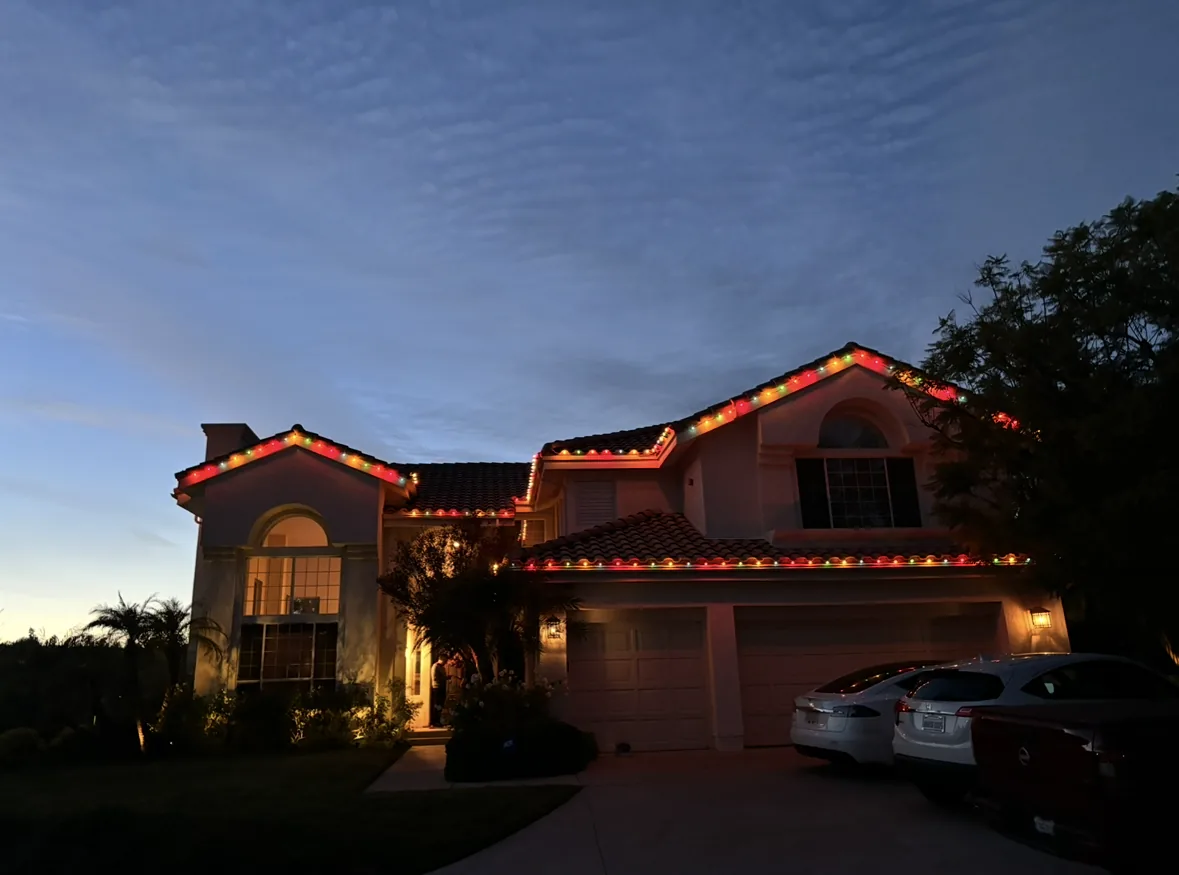
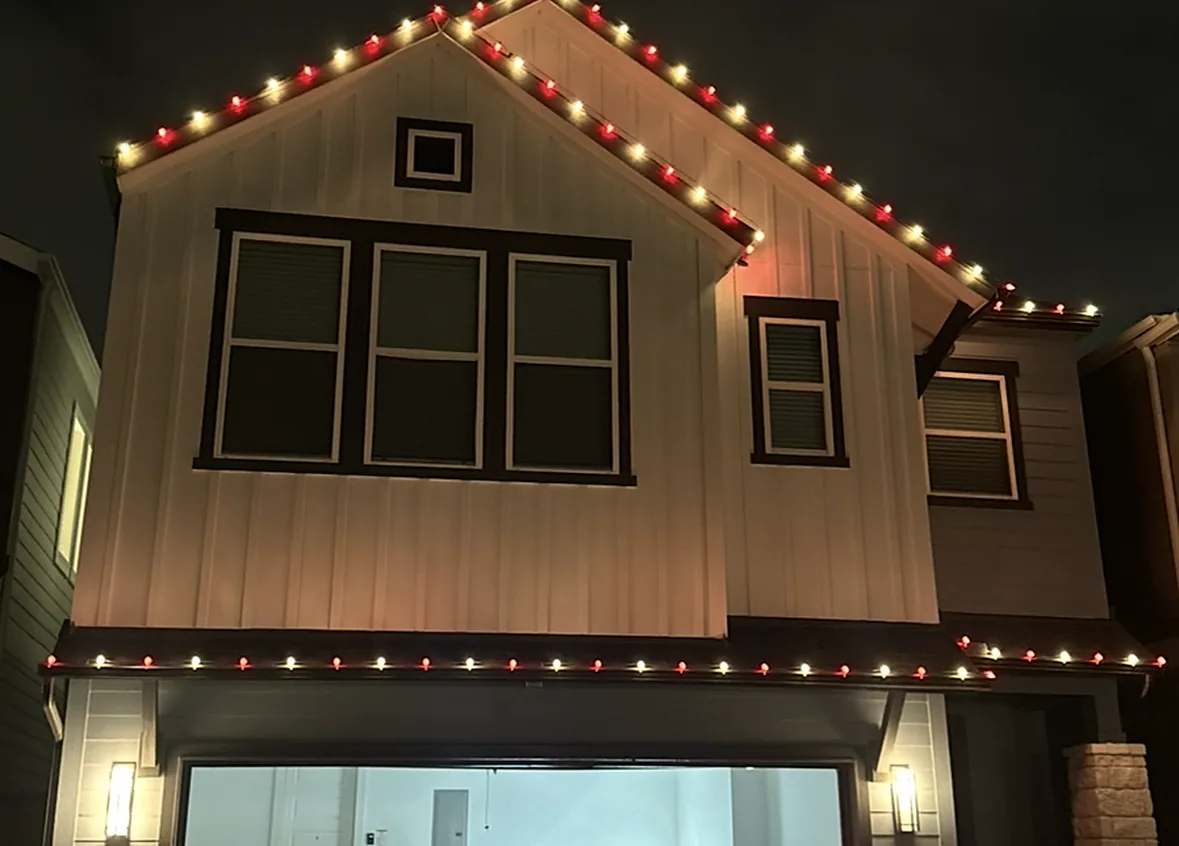
- ✓ Building facades and rooflines
- ✓ Trees in parking islands and medians
- ✓ Courtyards, patios and entry features
For an HOA, the entrance monument and the first trees drivers pass matter most. For a shopping center, it's the facades and trees visible from the main road and the walkways between stores. For a hotel, it's the arrival experience under the porte-cochere, the entry drive and the exterior spots where guests stop for photos. Industry pages for HOAs and communities, shopping centers and hotels go deeper on each.
Other properties have their own priorities. Churches often want the sanctuary facade, a steeple or a nativity area to read clearly before evening services, and our churches page covers that in detail. Restaurants care most about patios and the view from the dining room. Apartment communities focus on the leasing office exterior, the entry drive and the pool deck or courtyard where residents gather.
Parking-island and median trees are the workhorses of most commercial displays. Live oaks and cedar elms get trunk wraps from the ground to the first branch, plus the first few limbs where the budget allows, in commercial LED mini lights so each tree reads as a solid glow from the road. A row of six evenly wrapped trunks along a main drive often does more than an elaborate facade nobody can see from traffic.
Write a scope everyone can compare
If you're collecting more than one proposal, give every vendor the same list: which buildings, which trees, which signs, what color temperature, and what the install and takedown dates need to be. Ask each one to separate materials, labor, service calls and takedown. That makes it far easier for a board or owner to compare proposals fairly and to trim scope without starting over.
Power, Timers and Load Planning
Power shapes commercial design more than most managers expect. During the design consult, every existing exterior outlet gets mapped: at the monument sign, along the storefront, in the landscape beds and on light poles that have receptacles. LED displays draw a fraction of what incandescent did, but each outlet still has a limit, and loads are spread so one tripped GFCI doesn't darken the whole entry.
If a monument sign or a far parking island has no outlet, your electrician or maintenance team can add one before install, or the design can shift to elements that already have power. Photocells switch lights on at dusk, and timers turn them off at closing or a set hour that respects neighbors and controls energy use.
Safety Is Part of the Design
During installation
A commercial property has people under the work and around the cords for weeks, so safety is designed in from the start. Lifts, ladders and roof work need clear zones, cones and spotters, especially near parking lots and drive aisles. Busy retail centers and restaurants often schedule early-morning or after-hours installs so crews aren't working above customers or blocking fire lanes. Plan for this up front, since off-hours work affects scheduling.
During the season
Cords never cross walkways or accessible routes; they run up the back side of trunks, along building lines and behind planters. Plug connections sit off the ground with drip loops, and outlets get weatherproof in-use covers. Tall facade elements, wreaths and garland are tied off at several points for gusty fronts. One Houston-specific tip: check irrigation. St. Augustine lawns and beds on automatic sprinklers can aim spray straight at wrapped trunks and plug connections, so have your landscaper turn those heads away before install.
Scheduling Around Your Calendar
For most commercial properties, the target is simple: fully lit and tested before Thanksgiving. Retailers want the glow before Black Friday. Hotels want it before the first holiday parties. Churches plan around Advent, which begins four Sundays before Christmas. HOAs like to coincide with a community event.
If you're hosting a tree lighting ceremony, its date drives everything else. Work backward from it with a buffer for rain and wind. Commercial installs begin in early November, with large or multi-building properties scheduled at the front of that window and after-hours work booked where the property needs it. Takedown happens in January, often after hours, so the property is clean before spring leasing and events.
Plan for Maintenance, Not Just Installation
A display that's perfect on opening night and half dark by mid-December reflects on your property. Before signing, ask how in-season service works:
- ✓ How are outages reported, and by whom?
- ✓ Are service visits included in the contract?
- ✓ Who sets and adjusts photocells and timers?
- ✓ How is landscaper or vandal damage handled?
Designate one on-site contact who drives the property a few nights a week and reports anything dark. With Glacier, that contact calls and we schedule a service visit to find and fix the cause, whether it's a tripped GFCI at a landscape-bed outlet, a cord clipped by a mower in a parking island or a wreath tossed by a front.
The January debrief is worth fifteen minutes. Note what drew compliments, what went dark, which trees grew and need more lights, and anything the board or tenants asked for. Those notes become next year's scope and make the summer proposal easier to approve.
Consider Permanent Lighting for Rooflines
For properties that outline the same rooflines every year, permanent, app-controlled RGBW eave lighting can replace the annual roofline install. It's useful well beyond Christmas, for game days, grand openings, community events and everyday architectural accent, and it pairs well with seasonal tree wraps and garland. Because the track is a fixture, check with ownership, the landlord or the HOA first. See permanent Christmas lights for details.
How Glacier Lights Approaches Commercial Projects
Glacier starts with a free design consult, on site or from photos and a site plan, and returns a written proposal with photos and scope. Materials are commercial-grade LED supplied by Glacier. Installs are scheduled around your hours, photocells and timers are set before the crew leaves, in-season service calls are part of the program, and January takedown and off-season storage are included in writing.
A Simple Commercial Timeline
- ✓ June to August: request a proposal and set the budget
- ✓ August to September: design consult and final design
- ✓ September to October: approvals, paperwork and booking
- ✓ Early November: installation, lit by Thanksgiving
- ✓ January: takedown, then a short debrief
Whether you manage a center near River Oaks, an HOA in The Woodlands or a campus anywhere in greater Houston, the earlier you start, the smoother it goes. Explore our commercial Christmas lights service and request a free custom quote.

Ready for a Free Quote?
Tell us about your property and we will put together a custom design and quote for your Houston home or business.
Frequently Asked Questions
+How early should a business book commercial Christmas lighting?
+How is commercial Christmas light installation priced?
+Will you present a design to our HOA board?
+Can you light parking-island trees with no outlet nearby?
+What happens if lights go out during the season?